Heavy beats and soft soundscapes: we break down the trip-hop, electronic dub, lo-fi folk and experimental ingredients behind Fort Never, then walk through our debut album Home track by track.
People ask us what kind of band we are, and the honest answer takes more than one word. The sound of Fort Never sits where trip-hop, electronic dub, lo-fi folk and a stubborn streak of experimental arrangement overlap. On our SoundCloud we put it more simply: “Heavy beats and soft soundscapes. All produced by Timmie Rook.” That line is still the best summary we have, but each half of it hides a lot of decisions.
This piece pulls those ingredients apart one at a time, explains what each genre actually means (with a little history so the labels are useful rather than decorative), and then puts them back together with a listening guide to our debut album, Home. If you have ever wondered why a song can feel like a slow-motion head nod and a campfire tune at the same moment, this is our attempt to explain it.
Key takeaways
- Fort Never blends four ingredients: trip-hop rhythm and mood, electronic dub space, lo-fi folk songwriting and experimental arrangement.
- “Heavy beats and soft soundscapes” describes the core tension: weight at the bottom of the mix, air and texture on top.
- Three singers (Chantell Moody, Timmie Rook and Deano Coté) give the songs more than one point of view.
- The 2016 debut Home has eight tracks and works best heard front to back, ideally on headphones.
- You can stream the album on Spotify and Apple Music, and follow newer singles like “Take A Look At Us Now.”
Four ingredients, one band
Genre tags are a shorthand, and shorthand always leaves something out. Still, the four labels we use are not random. Each one names a specific habit: a way of building a beat, a way of treating space, a way of writing a melody, or a way of breaking the rules once the song is standing up. Here is the short version before we go deeper:
- Trip-hop gives us tempo, mood and the slow, heavy drum feel.
- Electronic dub gives us space: echo, delay, low end and the habit of pulling parts out of the mix.
- Lo-fi folk gives us the songs themselves: melodies you could sing on a porch, recorded without chasing perfection.
- Experimental arrangement is the permission slip to ignore the expected verse-chorus structure when a song wants something else.
None of these is a costume we put on. They are the records we grew up loving, filtered through a band that formed in Austin, Texas, a city where nobody blinks at a group that does not fit neatly in one bin.
Trip-hop: the heavy beats
Trip-hop came out of Bristol, England, in the early 1990s. Artists like Massive Attack, Portishead and Tricky took the sampling and breakbeat culture of hip-hop, slowed it down and pointed it toward something moodier and more cinematic. The tempos sat lower than most dance music, the drums were often dusty and sampled, and the vocals tended to float above the groove rather than ride on top of it. We wrote a whole separate piece on that history, A Listener’s Guide to Trip-Hop, if you want the full story.
What we take from it
For us, trip-hop is mostly about feel. A slow beat with real weight lets a song breathe. There is room between kick drums for a vocal line to hang, and the listener’s body settles into a pace that is closer to walking than dancing. When press compared our debut to Portishead-esque trip-hop, that is the part they were hearing: the low tempo, the heavy drums and the sense that something melancholy is happening just under the surface.
Where we bend it
Classic trip-hop leaned heavily on samples. Our version has a drummer in it. Deano Coté joining the band was the moment Fort Hood, the early collaboration between Chantell Moody and Timmie Rook, became Fort Never. A live player changes the conversation with programmed beats, because a human hand never hits exactly the same way twice. That push and pull between the grid and the person is one of the quiet engines of the band.
Electronic dub: the space around the beat
Dub started in Jamaica in the late 1960s and 1970s, when engineers and producers began remixing reggae records on the mixing desk itself. Names like King Tubby and Lee “Scratch” Perry are usually at the center of that story. They muted instruments, flooded single drum hits with echo, pushed the bass forward and treated the studio as an instrument in its own right. Later, electronic producers carried those habits into everything from ambient music to dubstep.
Dub teaches a strange lesson for a band: sometimes the most powerful thing you can do to a part is take it away and let the echo of it fill the room.
Subtraction as a tool
The dub influence on our music shows up less as reggae rhythm and more as an attitude toward space. A delay throw at the end of a vocal phrase, a bassline that drops out for a bar so its return hits harder, a reverb that turns a snare into a corridor: these are dub ideas. They let a mix feel bigger without adding more instruments.
Low end you feel
Dub is also the reason we care so much about the bottom of the mix. The “heavy” in “heavy beats” is as much about bass as drums. On a good system, or a decent pair of headphones, that low end should be something you feel in your chest, not just hear.
Lo-fi folk: the songs underneath
Strip away the production and most Fort Never songs could be played on one guitar or keyboard with a voice. That is the folk part. Folk songwriting values a melody you can remember, lyrics that sound like a person talking and a structure simple enough that a stranger could join in on the second chorus.
“Lo-fi” adds a recording philosophy. Lo-fi does not mean careless. It means choosing character over polish: leaving in the room sound, keeping a take that has a little grain in it because the feeling was right, letting a voice sound close and unvarnished instead of buffing it until it sounds like everyone else. A lot of our music is made in a home studio setting, which naturally pushes things in that direction. If you are curious about that side, we wrote about building a home studio on a budget.
Three voices
Fort Never has three singers: Chantell Moody, Timmie Rook and Deano Coté. Songwriting credit is shared among Chantell, Timmie, Deano and Matt Rusin. That spread matters to the sound. A song can shift perspective when a different voice takes a line, and harmonies between very different timbres sound more like a conversation than a choir. Chantell came to Austin from Des Moines and previously fronted the electronic pop group The Digital Wild, so she brings a pop sense of melody into a setting that is otherwise pretty shadowy.
Experimental arrangement: breaking the template
The fourth ingredient is the hardest to define, because it is mostly about what we refuse to do automatically. A standard pop arrangement adds instruments as a song goes on and peaks at the final chorus. That is a great template, and sometimes we use it. Other times a song is better if the peak comes in the middle, or if the last minute is just texture, or if the beat drops out entirely and the vocal carries on alone.
The “soft soundscapes” half of our self-description lives here. Pads, found sounds, ambient layers and odd textures can sit under a beat and change how it feels without anyone consciously noticing them. Our journal piece on field recording and soundscapes goes into how those layers are made in general terms.
A listening guide to Home
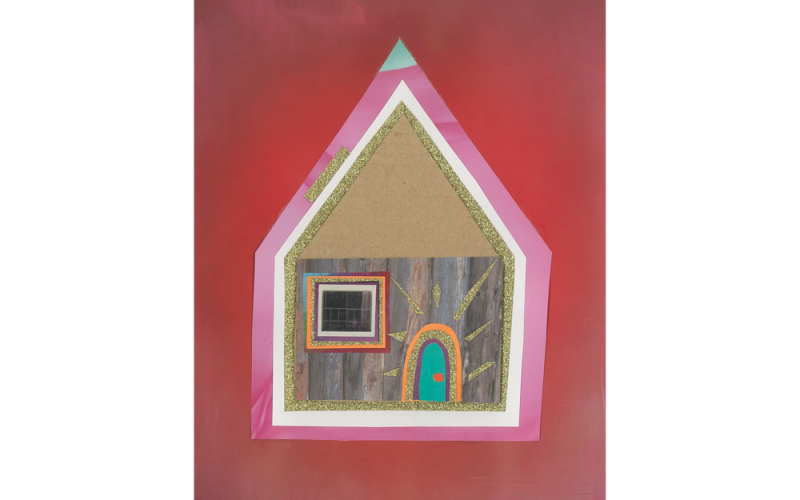
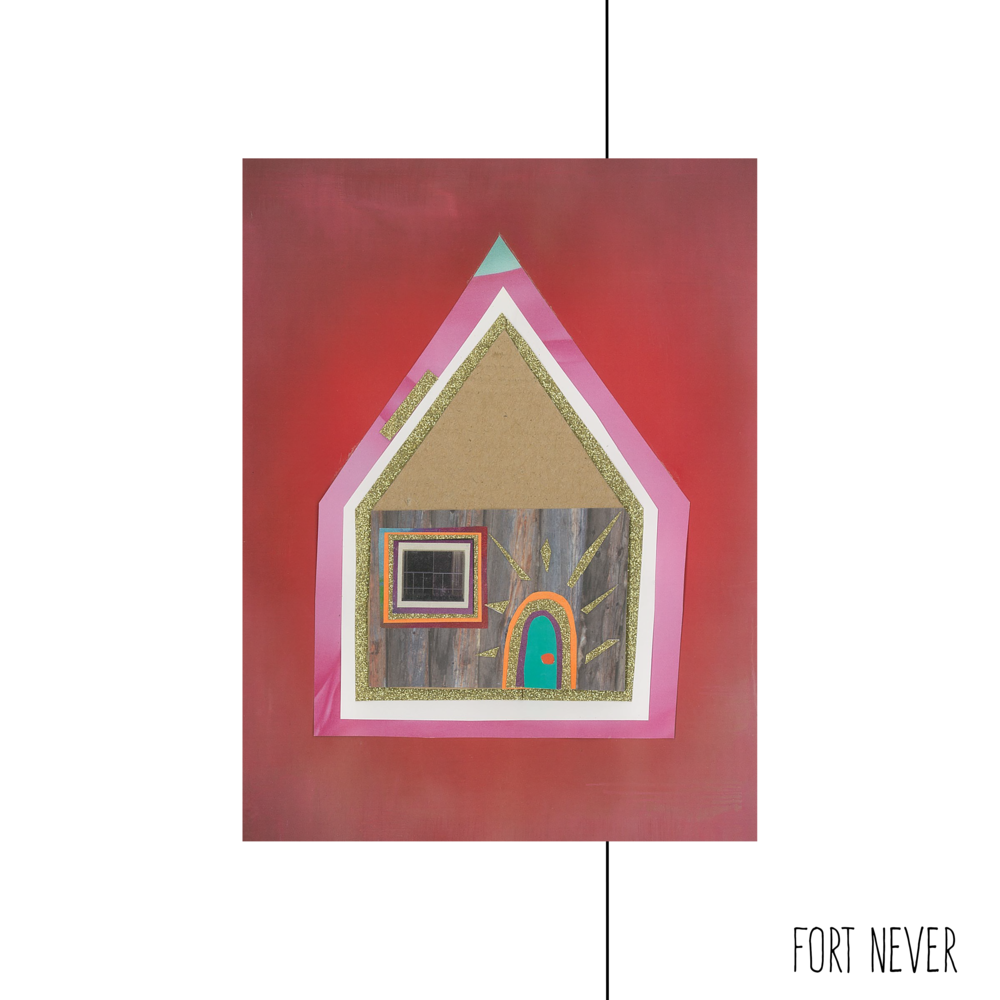
Home came out in 2016. It has eight tracks, and its cover is a painted house on a red background, which is about as direct a statement of theme as an album cover can make. Rather than tell you what each song “means,” here is a way to walk through it, with a few things to listen for. Your hearing of it is as valid as ours.
- Home Song opens the record and shares its name with the album. Openers set the terms of the deal with a listener, so pay attention to how the beat and the voices are balanced here; that balance is the frame for everything after it.
- Paradigm is one of two songs from the album with a music video, directed by H.D. Stone. Listen first, then watch, and notice how differently the song lands with images attached.
- Miss Justice has a title that sounds like a character. Listen to it as a portrait and pay attention to who is singing which lines.
- Pistol is a short, loaded word for a title. Notice where the tension in the track sits: in the rhythm, the vocal or the space between them.
- Don’t Push Me Away is a plea in its title alone. This is a good track for hearing how the band uses quiet and restraint, not just volume, to carry emotion.
- Searching for Something sits in the back half of the record. It is a good moment to stop and notice how the album has drifted from where it started.
- Fly High is the other video from the album, directed by Travis Hoggard. Like “Paradigm,” it is worth hearing on its own before you watch.
- Love Is Sweet closes the album. Closers tell you how a record wants to leave you, so let it play out fully before you reach for the next thing.
Both videos are collected on our videos page.
How to listen
We made Home as an album, not a playlist, so the sequence is part of the experience. If you can, carve out about the length of a commute or a long walk, put it on in order and resist skipping. Trip-hop and dub-influenced music rewards patience: a lot of the detail shows up on the second or third listen once your ear stops chasing the melody and starts noticing the space.
Where to listen and keep up
Here is where you can find Fort Never’s music and what each place is best for.
| Where | What you’ll find | Best for |
|---|---|---|
| Spotify | Home (2016); check the artist page for later singles | Saving tracks and adding them to playlists |
| Apple Music / iTunes | Home (2016); check the artist page for later singles | Streaming or buying the album |
| SoundCloud (soundcloud.com/fortnever) | Fort Never tracks | Quick listening and leaving comments |
| YouTube | “Fly High” and “Paradigm” videos | Watching the visual side of the songs |
| Instagram (instagram.com/fortnever) | News, photos and announcements | Hearing about new releases first |
After Home
The story did not stop in 2016. “We Keep Catching Fire” arrived in 2020, and “Take A Look At Us Now” followed in 2023, when it was featured as a KUTX Song of the Day. KUTX is Austin’s public music station, and being picked there is a welcome nod for a band that thinks of itself as part of the city’s scene. Those later singles are a good way to hear how the same four ingredients have shifted over the years, with the balance between beats and soundscapes moving around as the band changes.
Our SoundCloud is the most informal of these spaces, and it is where the “heavy beats and soft soundscapes” line lives.
Start listening
The best way to understand a sound is to hear it, not read about it. Put on Home from the top, then move on to the newer singles and see if you can pick out the trip-hop weight, the dub space, the folk songs underneath and the moments where the arrangement takes a turn you did not expect. Everything is linked from our music page. If you want to wear the band as well as hear it, the cream Fort Never logo tee is in the shop, and for booking or press, reach us through the contact page or at [email protected].
Frequently asked questions
What genre is Fort Never?
Fort Never blends trip-hop, electronic dub, lo-fi folk and experimental arrangements. The band sums it up as "heavy beats and soft soundscapes," all produced by Timmie Rook.
Where can I listen to the album Home?
Home, the band's eight-track 2016 debut, is available on Spotify and on iTunes/Apple Music. Our music page links to the album and to newer singles.
Who sings in Fort Never?
Vocals are shared by Chantell Moody, Timmie Rook and Deano Coté. Songwriting credits go to Chantell Moody, Timmie Rook, Deano Coté and Matt Rusin.
Written by Fort Never
Trip-hop, electronic dub and lo-fi folk from Austin, Texas. We write about sound, the Austin scene and the craft of independent music. About the band →