A practical, phase-by-phase guide for independent artists making a music video with limited money: concept, director, locations, light, lip-sync playback, editing and releasing it well.
A music video doesn’t need a big budget to work. It needs a clear idea, a plan that matches the money you have, and people who care about getting it right. Plenty of memorable videos were made with one camera, a borrowed light and a single location. Making a music video on an indie budget is mostly about making good decisions early, so the money and the shoot day go toward what viewers will actually see.
This guide follows a video from first idea to release day. It’s written for independent artists who want something that looks intentional, not expensive, and it assumes you’re working with friends, a small crew or a director who believes in the song.
Key takeaways
- Write the concept to fit the budget. One strong idea beats several half-finished ones.
- A good director turns a vague mood into a shot list; bring them in early and give them the song, not a script.
- Lock down locations and permissions in writing well before the shoot.
- Lighting matters more than the camera. A cheap camera with good light beats an expensive one in a dark room.
- Plan the release as carefully as the shoot: thumbnail, captions, short cutdowns and a date.
Concept and budget: decide what kind of video this is
Most music videos fall into a few broad types, and each has very different costs.
- Performance video: the band playing or singing the song, in a room, on a roof, in a field. Cheapest to make and often the most honest.
- Narrative video: a story with characters, sometimes featuring the band, sometimes not. More locations, more actors, more planning.
- Conceptual or visual video: built around an image, an effect or a mood rather than a story. Can be cheap or expensive depending on the idea.
- Hybrid: performance cut against narrative or abstract footage. Very common, and forgiving in the edit.
Start from the song
Listen to the track several times and write down images, colors and feelings it suggests. Look for one central idea you can describe in a sentence. If the concept takes a paragraph to explain, it’ll probably take a budget you don’t have to shoot.
Match ambition to money
Here’s a rough way to think about tiers. These are broad, hedged ranges; real costs vary a lot by city, crew rates and what you can borrow.
| Tier | Typical setup | Where the money goes | Approximate spend |
|---|---|---|---|
| Near zero | Friend with a camera or recent phone, one location, natural light | Food, gas, maybe a cheap light or reflector | Under a few hundred dollars |
| Lean | Small crew, a director, a day of rented lighting or lenses | Gear rental, crew stipends, a location fee | Several hundred to low thousands |
| Mid-indie | Experienced director and DP, multiple locations, actors | Crew day rates, gear package, permits, insurance, editing and color | Low to mid thousands and up |
Tip: Feed people well. On low-budget shoots where crew are working for little or nothing, good food and a realistic schedule are part of how you show respect, and they make people want to work with you again.
Working with a director
You can direct your own video, but an outside director brings a visual vocabulary and an objective eye that’s hard to have about your own song. Many indie directors are building their reels and look for music with a strong identity.
Finding the right fit
Watch a director’s past work before reaching out. Look for videos that feel close to what you want, not just videos that look expensive. Local film schools, film societies and other bands’ credits are good places to find people.
Give them the song and a feeling, not a shot list
Share the track, a few reference images or videos, and a short description of what the song means to you. Then let the director pitch. The best collaborations happen when the artist sets the emotional target and the director figures out how to hit it visually.
Agree on the basics in writing
Before you start, agree on budget, schedule, who owns the footage, how many rounds of edit notes you get and how the director will be credited. A simple email that everyone replies “yes” to is better than nothing; a short agreement is better still.
For examples of how different directors interpret Fort Never songs, watch “Fly High,” directed by Travis Hoggard, and “Paradigm,” directed by H.D. Stone, on our videos page. Both songs come from the same album, Home, and each director brings their own visual approach, which makes them a useful pair to compare.
Locations, permissions and permits
Locations make or break a low-budget video. A visually strong space does much of the work that set design and lighting would otherwise have to do.
Look for places you can control
Homes, practice spaces, friends’ businesses after hours and private land are easier than busy public streets. You can control noise, light and time, and you won’t have strangers walking through the shot.
Get permission in writing
For private property, get the owner’s written permission with the date, times and what you’ll be doing. A simple location release protects everyone. If anyone recognizable appears on camera, have them sign a talent release, too.
Check local rules for public spaces
Filming on streets, sidewalks, parks or other public property often requires a permit, especially if you’re blocking traffic, using lights or bringing more than a handful of people. Rules vary by city and change over time. In Texas, the Texas Film Commission is a useful starting point, and most larger cities, Austin included, have a local film office or permitting process. Call ahead; it’s much easier than being asked to leave mid-shoot.
Scout at the right time of day
Visit each location at the same time you plan to shoot. Note where the sun is, what the background noise is like, where the power outlets are and where the crew can park and load in.
Lighting and camera on a budget
Viewers forgive a lot, but they rarely forgive murky, noisy footage. Prioritize light over camera.
Use the light you have
- Golden hour, roughly the hour after sunrise and before sunset, gives warm, soft light that flatters everyone.
- Blue hour, just after sunset, gives moody, even light that suits atmospheric music.
- Overcast days act like a giant softbox, great for faces.
- Practical lights, such as lamps, neon, string lights and car headlights, add depth and can be the main light source in night scenes.
Add a little control
A single soft key light and a reflector can transform an interior scene. Inexpensive LED panels and a large piece of diffusion fabric go a long way. If you can, add a light behind the subject to separate them from the background.
Camera choices
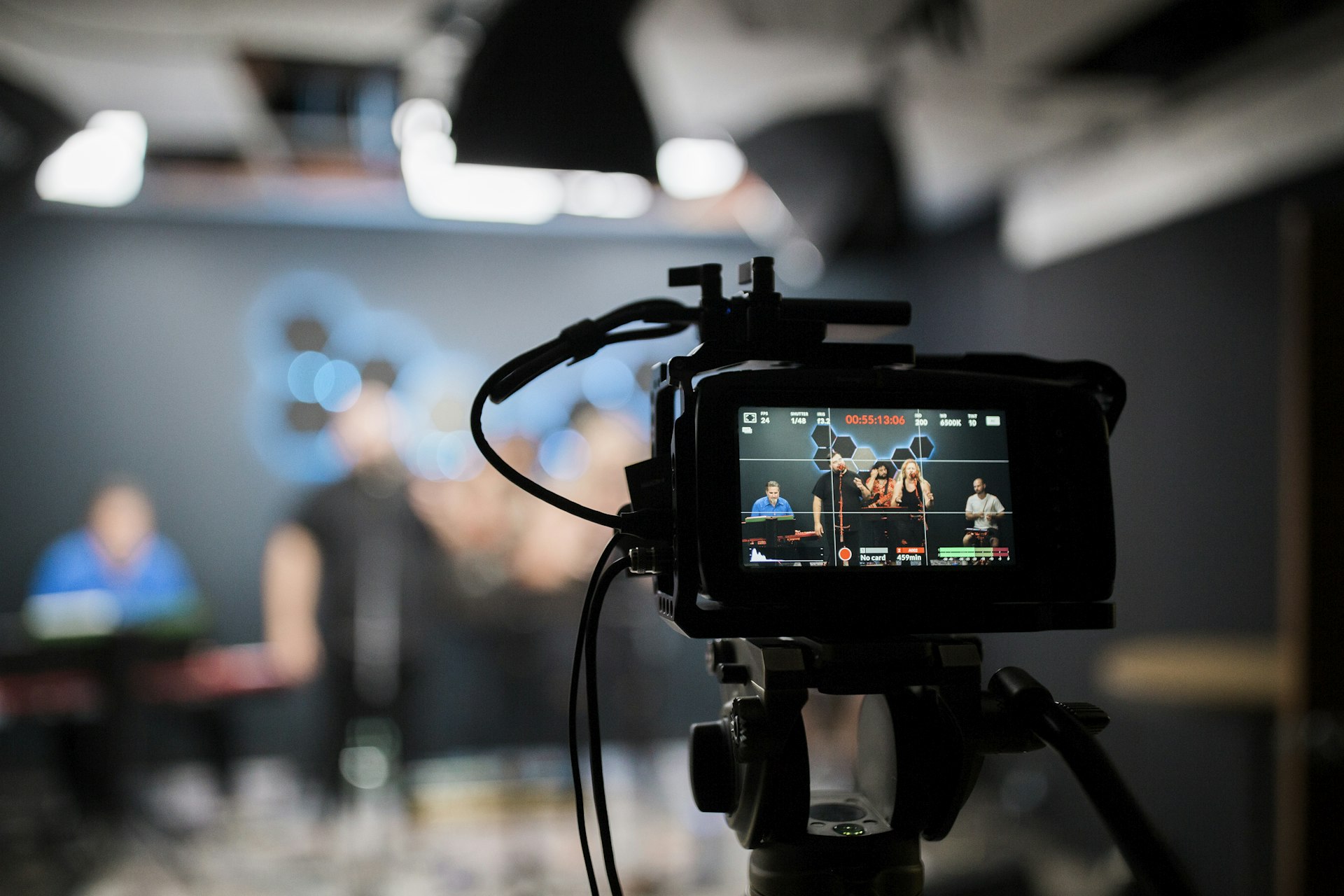
A recent phone with manual controls, an older mirrorless camera or a rented cinema camera can all work. More important than the model: shoot at a consistent frame rate, lock exposure and white balance rather than leaving them on auto, and stabilize the shot with a tripod, gimbal or careful handheld technique.
Expensive gear can’t rescue a weak idea, but a strong idea can survive almost any gear.
Shoot day and lip-sync playback
A calm shoot day comes from planning. Make a shot list, a simple schedule and a call sheet with addresses, contact numbers and times. Shoot the most important shots first, in case you run out of time or light.
Playback basics
For any shot where someone sings, play the song out loud on set from a speaker, not just in the performer’s head. Singers should actually sing or clearly mouth every word; half-hearted mouthing always shows. Start playback a few seconds before the section you’re filming so the performer can settle into the groove.
Slating for sync
Record reference audio on the camera and make a clear clap or slate at the start of each take. In the edit, the camera’s scratch audio makes lining footage up to the song quick and precise.
The slow-motion trick
To get slow-motion footage where the lip-sync still matches, play the song at double speed on set and shoot at double your project frame rate, for example 48 frames per second for a 24 fps edit. When the footage is conformed to 24 fps, it plays at half speed, and the singer’s lips line up with the song at normal tempo. The double-speed playback sounds strange, so let the performer rehearse with it first.
Cover yourself
Shoot the full song from at least two or three angles, such as a wide shot, a medium shot and a close-up. That gives the editor options and hides any moment where sync drifts.
Editing and color
The edit is where a music video finds its rhythm. Start by laying the final master audio on the timeline and syncing every performance take to it.
- Build a rough cut using the strongest performance take as a backbone.
- Cut on the music. Edits that land on beats, fills or vocal phrases feel deliberate. Slower songs often benefit from fewer, longer shots.
- Get feedback, then trim. Watch with fresh eyes and remove anything that doesn’t serve the song.
- Color for mood. A consistent color treatment makes footage from different cameras and locations feel like one world.
- Export carefully. Use the platform’s recommended settings and always use the final mastered audio, not a camera track.
Plan the release, not just the video
A finished video with no release plan can disappear in a day. Give it the same attention you gave the shoot.
- Pick a date and announce it a week or two in advance.
- Design a thumbnail that reads clearly at small sizes.
- Add captions or lyrics for accessibility and for viewers watching with the sound off.
- Make short vertical cutdowns for social platforms, pointing back to the full video.
- Credit everyone in the description, including the director, crew and locations.
- Embed it on your website so it lives somewhere you control.
Keep it working after launch day
Most views on an indie video don’t arrive in the first 24 hours. Share it again when you play a show, pin it to your profiles, send it to local blogs and radio hosts who’ve supported you before, and use behind-the-scenes photos or clips to give people a second reason to watch. Fans sharing the link with friends is still one of the most powerful things that can happen to a small band’s video; our guide to supporting independent musicians explains why that kind of word of mouth matters so much.
Watch, then make your own
The best preparation for making a video is watching closely, noticing how a director uses light, location and editing to serve a song. Start with “Fly High” and “Paradigm” on our videos page, then listen to the full album on the music page. Need a band for your own film or event? Get in touch through contact.
Frequently asked questions
How much does an indie music video cost?
It varies enormously. A simple performance video shot by a friend can cost little beyond food and gas, while a video with a hired crew, rented gear and locations can run into the thousands. Write the concept to fit the budget you actually have.
Do I need a permit to film a music video?
Often, if you film on public streets, sidewalks, parks or other public property, especially with lights or a crew. On private property you need the owner's written permission instead. Rules vary by city, so check with your local film office before the shoot.
How do I keep lip-sync accurate in slow motion?
Play the song back on set at double speed while shooting at double your project frame rate, for example 48 frames per second for a 24 fps edit. When the footage is conformed to normal speed, it plays in slow motion and the lips match the song at normal tempo.
Written by Fort Never
Trip-hop, electronic dub and lo-fi folk from Austin, Texas. We write about sound, the Austin scene and the craft of independent music. About the band →