From Rock the Vote to registration tables at festivals, musicians have long encouraged fans to take part. A strictly nonpartisan look at the history, how drives work and how to check your registration.
Concerts are one of the few places where thousands of people from different neighborhoods, backgrounds and points of view stand in the same room and agree on something, even if it is only that the bass line in the second song is perfect. That shared feeling is why music and civic engagement have been linked for decades. Artists have used their stages, liner notes and social feeds to remind fans that voting is one of the simplest ways to have a say in the community they share.
This article looks at how musicians came to play a role in voter participation, how nonpartisan registration drives work at shows, the small Instagram idea we tried during the 2018 Texas midterms, and how you can check your own registration in a few minutes. It is strictly nonpartisan. We are not here to tell anyone how to vote, only to encourage everyone who is eligible to take part.
Key takeaways
- Musicians have encouraged young people to vote for decades, and nonpartisan groups such as Rock the Vote (founded 1990) and HeadCount (founded 2004) made it a regular part of concert culture.
- Effective drives focus on registration and information, never on telling fans whom to support.
- In 2018, we invited fans to share their “I voted” stickers on Instagram as a simple, positive nudge to take part in the Texas midterms.
- Registration rules, deadlines and ID requirements vary by state, so official sources are the place to check.
- Anyone who wants to run a drive should learn local rules first, as some states require training or appointment to register voters.
Why musicians talk about voting at all
Musicians are not experts on policy, and most of the good ones know it. What they do have is a relationship with an audience that skews younger and that often feels disconnected from formal politics. Voter turnout among younger adults in the United States has historically trailed turnout among older age groups, and that gap is one reason artists keep showing up for nonpartisan participation campaigns. A reminder from a band you love lands differently from a reminder from a billboard.
There is also a practical overlap. Local elections shape a lot of things that matter to a live music scene: zoning and land use decisions that affect where venues can operate, rules on sound and late-night hours, arts funding, transportation and the cost of living that determines whether working musicians can afford to stay in a city. Anyone who loves live music in a place like Austin has a stake in local decisions, whatever their views on how those decisions should go.
Encouraging people to vote is not the same as telling them how to vote. The first builds community; the second is a conversation people should be free to have, or not have, on their own terms.
A brief history of music and voter outreach
Artists have been part of civic life for a long time, from benefit concerts to songs that captured the mood of an era. The more organized, nonpartisan side of music-driven voter outreach took shape in the late twentieth century.
| Year | Milestone | Why it mattered |
|---|---|---|
| 1971 | The 26th Amendment lowers the U.S. voting age to 18 | Created a large new group of eligible voters, many of them music fans |
| 1990 | Rock the Vote is founded by people in the music industry | Brought voter registration messaging into music media and youth culture |
| Early 1990s | Music television runs youth-focused election coverage and registration campaigns | Made voting part of mainstream pop culture conversation |
| 1993 | The National Voter Registration Act is signed into law | Expanded registration opportunities, such as at motor vehicle offices |
| 2004 | HeadCount is founded | Put nonpartisan registration tables at concerts and festivals on a large scale |
| 2012 | The first National Voter Registration Day is held | Created an annual nonpartisan moment in September for registration events, including at venues |
Rock the Vote
Rock the Vote started in 1990, founded by people in the music industry who wanted to get young people involved in elections. Over the years it has used concerts, artist partnerships and online tools to help people register and find election information, presenting itself as nonpartisan throughout.
HeadCount
HeadCount, founded in 2004, took a very hands-on approach: volunteers set up tables at shows and festivals and register fans on the spot, often in partnership with touring artists. If you have ever seen a clipboard table near the merch booth at a big show, there is a decent chance this model was behind it. The idea is simple. Meet people where they already are, in a good mood, with a few minutes to kill between sets.
How bands and venues run registration drives
Registration drives at shows are usually low-key. The best ones feel like a helpful part of the night rather than a lecture. Here is what a typical approach looks like.
Partnering vs. doing it yourself
The easiest route for most bands and venues is to partner with an established nonpartisan organization that already has trained volunteers, materials and knowledge of local rules. Doing it yourself is possible, but the rules can be specific. In Texas, for example, people who want to collect voter registration applications generally need to be appointed as volunteer deputy registrars through their county, which involves training and specific requirements for returning completed applications. Other states have different systems. Check with your county or state election office before planning anything.
What a good drive includes
- A clearly marked table in a visible, low-traffic spot, often near the merch area.
- Accurate, official information on deadlines and how to check registration.
- Volunteers trained to answer questions without offering opinions about candidates, parties or ballot measures.
- A short, friendly mention from the stage, not a speech.
- No pressure. People who are not eligible, already registered or simply not interested should be able to walk by without a second thought.
Low-effort ideas for smaller acts
Not every band has the people or the floor space for a full registration table, and that is fine. A few lighter-touch options can still help:
- Put a QR code linking to an official registration lookup on a flyer, a merch table sign or the screen behind the stage between sets.
- Post a reminder on National Voter Registration Day in September and again a week or so before your state’s registration deadline.
- Share plain, official information for first-time voters, such as how to find a polling place or what ID is accepted, instead of opinions.
- Include a one-line reminder in your newsletter or show announcement during election season.
Small reminders from people fans already follow can be surprisingly effective, precisely because they arrive in a familiar voice and ask for so little.
Keeping it nonpartisan
This is the rule that matters most. A registration table that hints at a preferred candidate or party undermines trust and may run into legal and venue-policy problems. Keep signs, shirts, flyers and stage banter focused on participation itself: register, check your status, know your deadlines, make a plan.
Our 2018 “I voted” idea
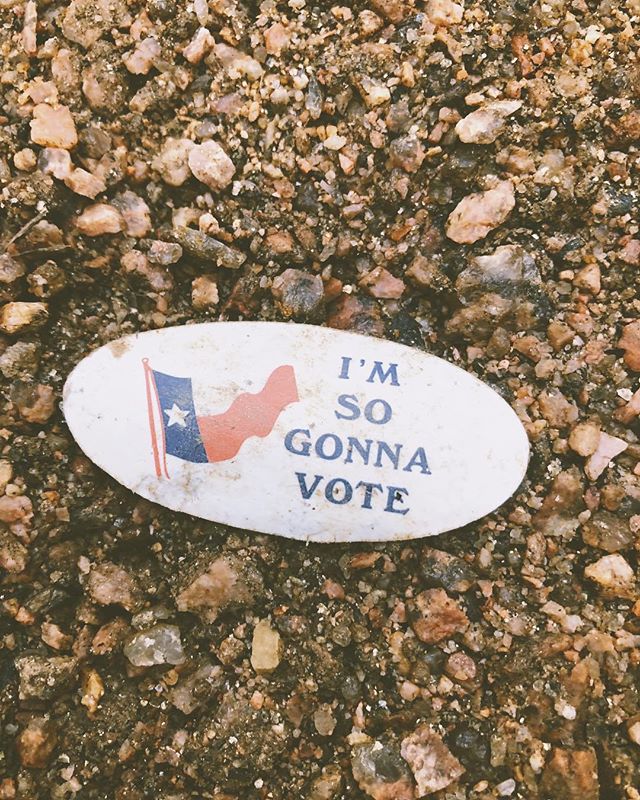
Ahead of the 2018 Texas midterm elections, we ran a simple campaign on Instagram. We encouraged fans to vote and invited anyone who posted their “I voted” sticker to get a free download of an unreleased song. The point was not who anyone voted for. It was a small, friendly way of saying that participating matters, and a thank-you to the people who follow our music.
Why stickers? Because they are a visible, shareable sign of participation that does not reveal anything about how someone voted. A feed full of stickers also makes voting look like what it is: something ordinary people do, in between work, school and going to shows.
If you want to try something similar
Social campaigns like this are easy to run, but a few cautions apply. Laws at the federal and state level restrict offering anything of value in exchange for voting, and the details can be technical. Many businesses and organizations that run “I voted” promotions make the perk available to everyone who asks, regardless of whether they voted, to stay clearly on the right side of those rules. If you are planning a promotion, read up on current rules or ask someone with election-law knowledge first. Keep the messaging nonpartisan, and remember that some people cannot vote, through age, citizenship or other reasons, so avoid making anyone feel excluded.
How fans can check their registration
Whether you live in Austin or anywhere else in the country, checking your registration takes a few minutes. Rules change, so treat this as a starting point and confirm details with official sources.
- Start with an official source. Vote.gov, run by the U.S. government, points you to your state’s official registration and election information. Texans can also use the Texas Secretary of State’s voter information site, VoteTexas.gov.
- Confirm your status. Make sure your registration is active and your address is current, especially if you have moved recently.
- Note the deadline. Registration deadlines vary by state. In Texas, the deadline has generally been 30 days before an election, and Texas has not offered full online registration for new voters as of this writing, so leave time for paperwork.
- Check ID rules. Some states, including Texas, have specific identification requirements at the polls. Look up the current list of accepted IDs.
- Find your polling place and options. Early voting, mail ballots and polling locations all have their own rules and eligibility requirements.
- Make a plan. Decide when and how you will vote, the same way you would plan to catch a show.
Nonpartisan third-party sites such as Vote.org also offer reminders and lookup tools, but your state or county election office is the final word.
Civic life beyond Election Day
Voting is one piece of being part of a community. Music scenes thrive when people show up in other ways too: attending public meetings about issues that affect venues, volunteering with local arts and music nonprofits, supporting community radio, and simply buying a ticket to see a local band on a weeknight. Our guide on how to support independent musicians covers many of those everyday actions, and if you are new to the city, our fan’s guide to the Austin scene is a good place to start.
Next steps
Take five minutes today to check your registration through an official source, then send the link to one friend. If you want to learn more about who we are and what we make, visit our about page, listen on the music page, or reach out through the contact page if you are organizing a nonpartisan community event and want to talk about music for it.
Frequently asked questions
Why do musicians encourage fans to vote?
Artists have a strong connection with audiences that skew younger, a group whose turnout has historically trailed older voters. Nonpartisan reminders from musicians are a way to encourage participation without telling anyone how to vote.
Can a band run a voter registration drive at a show?
Yes, but rules vary by state. Many bands partner with established nonpartisan organizations. In Texas, people who collect registration applications generally need to be appointed as volunteer deputy registrars through their county, so check with local election officials first.
How do I check if I am registered to vote?
Start at Vote.gov, which directs you to your state's official election site. In Texas, VoteTexas.gov from the Secretary of State has registration, deadline and ID information. Your county election office is the final authority.

Written by Fort Never
Trip-hop, electronic dub and lo-fi folk from Austin, Texas. We write about sound, the Austin scene and the craft of independent music. About the band →