Rain, traffic hum and cicadas can make a track feel lived-in. Learn the gear, technique, ethics and editing behind field recording, and how to tuck soft soundscapes under heavy beats.
Some of the most interesting sounds on a record were never played on an instrument. Rain on a tin roof, the hum of a vending machine, a train crossing a bridge two miles away, a crowd murmuring before a show: captured carefully, these sounds give a track a sense of place that no synth preset can fake. Field recording is the practice of capturing those sounds outside the studio, and soundscapes are what happens when you shape them into something musical.
Our SoundCloud bio sums up what we chase as a band: “Heavy beats and soft soundscapes.” The beats get most of the attention, but the soft part matters just as much. This guide covers the gear, technique, ethics and editing that take a sound from “I heard something cool on my walk” to a texture that sits under a beat and makes the whole song feel lived-in.
Key takeaways
- You can start field recording with a phone, but a dedicated handheld recorder gives you cleaner audio and more control.
- Wind protection, steady handling and closed-back headphones fix most beginner problems.
- Get permission on private property, avoid capturing private conversations and respect wildlife.
- Edit for usefulness: trim, clean up rumble, label files and build loopable sections.
- In a mix, field recordings usually work best low, filtered and carved around the drums and vocals.
Why field recordings belong in songs
Electronic music can sound sterile when every sound comes from the same box. A layer of real-world noise adds movement, air and small imperfections that the ear reads as “real.” Trip-hop has leaned on this idea since the early Bristol records, which often pulled in vinyl crackle, film dialogue and room ambience to make beats feel dusty and cinematic. Dub took a similar approach from another direction, treating space and echo as instruments in their own right.
Field recordings can play several roles in a track:
- A bed. A quiet ambience running under a whole song, like a room tone or distant traffic.
- A transition. A swell of rain or a passing car that bridges a verse and chorus.
- A rhythm source. Footsteps, a door latch or a dropped pan chopped into percussion hits.
- A tonal element. A refrigerator hum or a ringing railing pitched to the song’s key and used as a drone.
- A story cue. A sound that tells the listener where they are before a word is sung.
Gear: from your phone to a dedicated recorder
The best field recorder is the one you have with you when a great sound happens. That said, each step up in gear buys you real improvements.
| Level | Typical gear | Strengths | Limitations |
|---|---|---|---|
| Starter | Smartphone, ideally with a recording app that lets you turn off automatic processing | Always with you, easy to share and file | Small mics, noise reduction and auto gain can smear the sound |
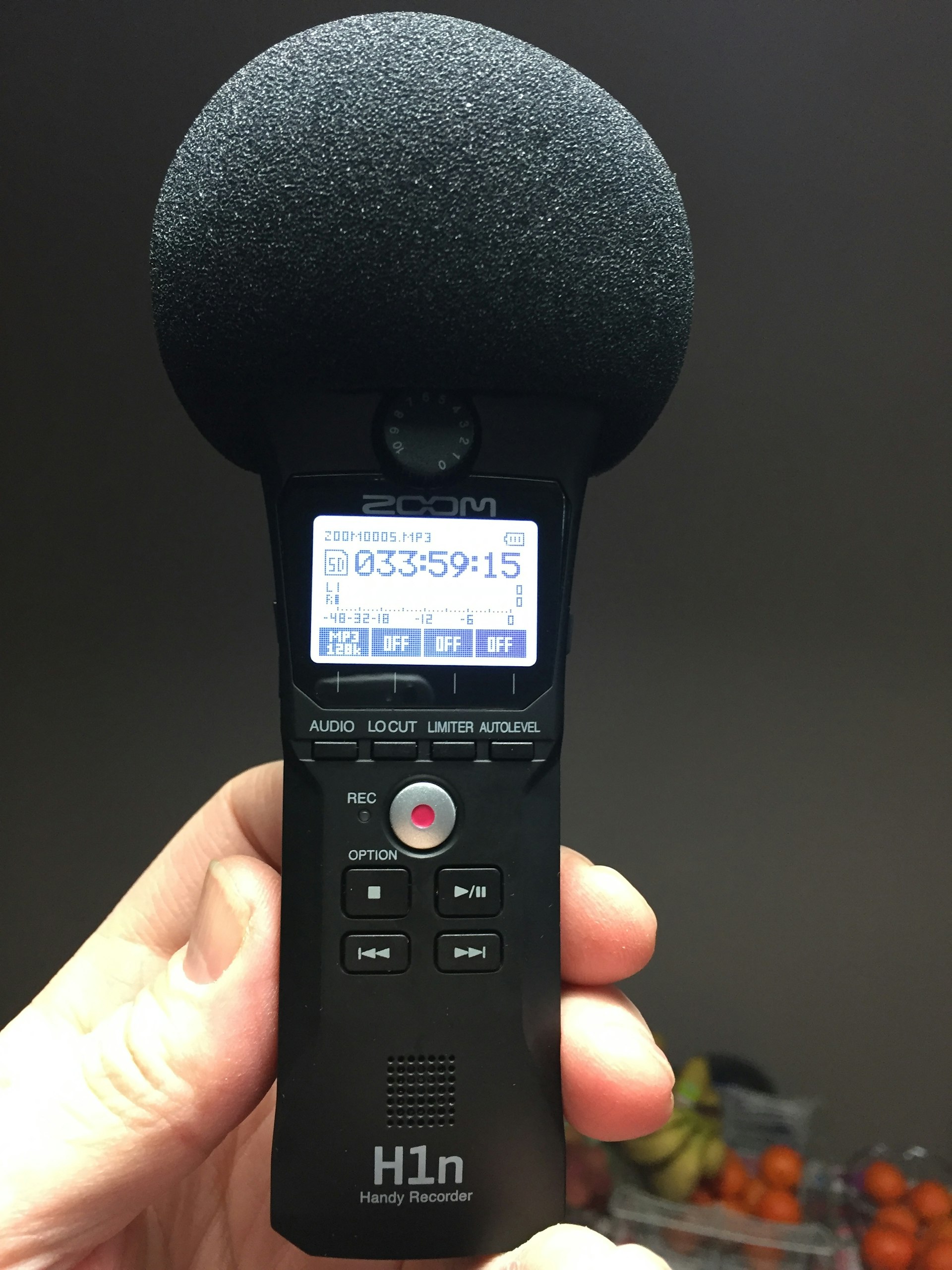
| Step up | Clip-on phone mic or a compact handheld stereo recorder | Cleaner stereo image, manual gain, better preamps | Still sensitive to wind and handling noise |
| Dedicated | Larger handheld recorder with XLR inputs, some offering 32-bit float recording | Room to grow, external mics, more headroom | Bulkier, more settings to learn |
| Specialist | Shotgun mic, contact mics, hydrophone, binaural mics | Sounds you cannot capture any other way | Niche, best added once you know what you want |
Handheld recorders from brands like Zoom, Tascam and Sony are common starting points, and prices shift often enough that it is worth comparing current models rather than relying on any single recommendation. A few features are worth looking for: built-in stereo mics, manual input gain, a headphone output, a low-cut filter and decent battery life.
Specialty mics worth knowing about
Contact microphones (often inexpensive piezo discs) pick up vibration rather than airborne sound. Stick one on a chain-link fence, a metal railing or a tabletop and you hear a hidden world of creaks and resonances. Hydrophones record underwater, from creek bubbles to the strange clicks of a pool filter. Shotgun mics are highly directional, useful for isolating one sound in a noisy setting. Binaural mics, worn in or near the ears, produce recordings that sound remarkably three-dimensional on headphones.

Technique: how to capture clean, usable sound
Settings
Record in WAV, not MP3. Twenty-four-bit audio at 48 kHz is a sensible default and lines up with video work. If you plan to pitch sounds down dramatically, a higher sample rate such as 96 kHz preserves more high-frequency detail when slowed. Set your gain so normal levels sit comfortably below the top of the meter, leaving room for sudden peaks. Recorders that offer 32-bit float can make clipping far less of a concern, but you still want sensible levels for the cleanest result.
Handling and placement
- Hold still or use a stand. Fingers sliding on a recorder body make loud thumps. A small tripod or a pistol grip helps.
- Monitor with closed-back headphones. What your ears hear in the open and what the mic hears are often very different.
- Move the mic, not the gain. Getting closer to a sound usually improves the ratio of what you want to what you do not.
- Record longer than you think. Let the recorder run for at least a minute or two before and after the moment you are after. The quiet stretches become useful room tone.
- Stay quiet. Breathing, clothing rustle and footsteps all end up on tape.
- Slate your takes. Say the location and what you are recording at the start, or keep a quick note on your phone, so you can find it later.
Wind protection
Wind is the number-one reason outdoor recordings are unusable. Even a light breeze hitting a bare mic capsule causes low, rumbling bursts. The foam windscreens that come with many recorders help indoors and in still air. Outdoors, a furry windscreen (often called a “dead cat”) is close to essential. In a pinch, use your body or a wall as a windbreak, and record in the lee of a building or tree.
Timing and place
Early morning is often the quietest and most musical time of day, before traffic, leaf blowers and HVAC units fill the air. Weather changes everything: humid evenings carry sound differently than cold, dry mornings. In Austin, summer brings cicadas so loud they feel like a synth pad, and great-tailed grackles turn many parking lots into an evening choir. Start a library of the sounds that define where you live.
A field recording is half sound and half attention. The microphone only captures what you were patient enough to stand still for.
Ethics and permissions
Field recording is mostly harmless, but it raises real questions about privacy, property and the environment. These are general guidelines, not legal advice, and rules vary by location.
- Ask on private property. Shops, cafes, venues and homes belong to someone. A quick request is usually met with curiosity rather than suspicion.
- Avoid capturing private conversations. Recording laws differ between states and countries. Background crowd murmur is one thing; an identifiable private conversation is another. If a voice is clear enough to understand, either get permission or leave it out.
- Check rules in parks and public facilities. Some parks, transit systems and public buildings have rules about recording, especially for commercial use. Look them up before you plan a session.
- Respect wildlife. Keep your distance, do not disturb nests, and avoid playing recorded animal calls to provoke a response.
- Know the license on borrowed sounds. Sound libraries such as Freesound host recordings under various Creative Commons licenses. Some require attribution, and some prohibit commercial use. Read the terms before you put a sample in a released track.
Editing raw recordings into usable material
Raw field recordings are rarely ready for a song. A short editing session turns a long, messy file into a set of clean, labeled clips.
Clean-up
Start by trimming handling noise and any obvious bumps. A high-pass filter somewhere around 60 to 100 Hz removes much of the rumble from wind and traffic without changing the character of most sounds. Noise reduction tools can help with steady hiss or hum, but use them lightly. Heavy settings leave a watery, artificial sound that is worse than the noise you removed. Free editors like Audacity cover the basics, and most DAWs have everything you need.
Organize your library
Name files with what, where and when, for example “rain-tin-roof-backporch-morning.wav.” Future you will be grateful. Keep the untouched originals in a separate folder from your edits.
Make it loopable
For beds and drones, find a stretch without distinctive events (no single car horn or dog bark), then loop it with a crossfade so the seam is invisible. A loop that is too short will start to sound mechanical; longer loops of thirty seconds or more usually feel more natural.
Transform it
Some of the best soundscapes are barely recognizable as their source. Try pitch-shifting, time-stretching, reversing, heavy filtering, granular processing or feeding a sound through a long dub delay. You can even record an impulse response, a sharp clap in a stairwell or underpass, and use it with a convolution reverb to place your instruments in that real space.
Putting textures under beats
This is where field recording meets production, and where “heavy beats and soft soundscapes” becomes a mixing decision rather than a slogan.
Leave room for the essentials
The drums and the vocal are usually the focus. Field recordings tend to work best tucked low in the mix, felt more than heard. Use EQ to carve space: roll off lows so a rain bed does not muddy the kick and bass, and dip the upper mids where the vocal lives. If you want the texture to breathe with the groove, sidechain it lightly to the kick so it ducks on every hit.
Tune it and time it
Many found sounds have a pitch. Find it with a tuner or by ear, then shift it to fit the key of the song, and that hum becomes a drone that supports the harmony instead of fighting it. For rhythmic material, slice transients and place them on the grid, then nudge some hits slightly off to keep a human feel. Our article on drum machines vs. live drums covers swing and feel in more detail.
Automate the scene
Static textures get stale. Automate the level, filter cutoff or reverb send so the soundscape opens up in a chorus and pulls back for a verse. Bringing a sound in just before a drop, or letting it carry on alone for a few seconds after the beat stops, can be the moment a listener remembers.
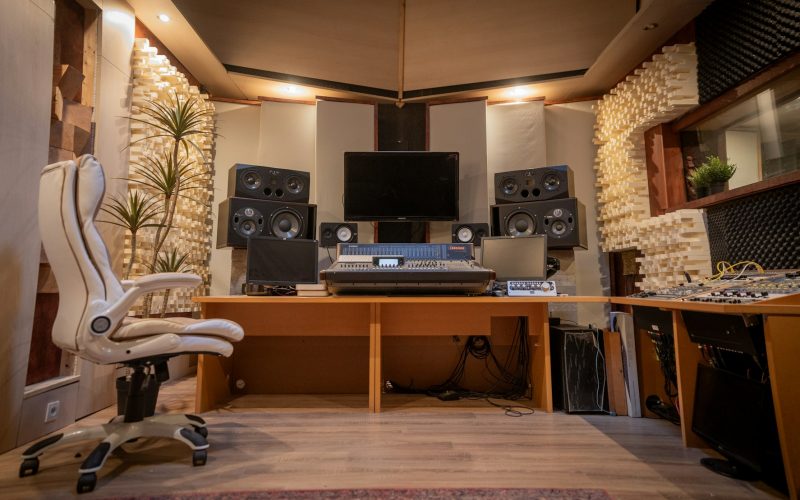
If you are setting up a space to work on all this, our guide to building a home studio on a budget covers monitoring and room treatment, which matter a great deal when you are judging quiet, detailed sounds.
Go out and listen
Take your phone or recorder on your next walk and capture five sounds you have never paid attention to. Then put one of them under a beat. To hear how we balance weight and air in our own songs, listen on the music page, read Inside the Sound of Fort Never, or catch the mood on screen on our videos page. If you have a project that needs production help, see our services.
Frequently asked questions
Can I do field recording with just a phone?
Yes. A phone is a fine place to start, especially with a recording app that lets you turn off automatic gain and noise suppression. A dedicated handheld recorder gives cleaner audio, manual gain and better wind protection when you are ready to step up.
How do I stop wind noise in outdoor recordings?
Use a furry windscreen, often called a dead cat, rather than just the foam cover. Shelter the recorder with your body, a wall or a tree, and apply a gentle high-pass filter during editing to remove leftover low rumble.
Is it legal to record sounds in public?
General ambience in public places is usually fine, but laws on recording conversations vary by state and country, and some parks and transit systems have their own rules. Ask permission on private property and avoid capturing identifiable private conversations. This is not legal advice.

Written by Fort Never
Trip-hop, electronic dub and lo-fi folk from Austin, Texas. We write about sound, the Austin scene and the craft of independent music. About the band →