Many shows hit levels where safe exposure is measured in minutes. Here is how fans and musicians can protect their hearing with the right earplugs, smart habits and attention to warning signs.
Loud music is part of the point. The kick drum you feel in your chest and the bass line that rattles the bar glasses are a big reason people go out to hear bands instead of listening at home. The trouble is that the same sound pressure that makes a show thrilling can wear down the delicate hair cells in your inner ear, and those cells do not grow back. Learning how to protect your hearing at concerts is not about turning the experience down to nothing. It is about keeping your ears working well enough to enjoy shows for the next fifty years.
This guide is for both sides of the stage: fans who want to know what a “safe” night out looks like, and musicians who spend far more hours around loud sound than any audience member. We play heavy beats in small rooms ourselves, so this is a topic we care about personally.
Not medical advice. This article is general information for music fans and performers. It is not a substitute for advice from an audiologist, an ear, nose and throat (ENT) doctor or another qualified health professional. If you have hearing changes, pain or ringing that will not go away, see a professional.
Key takeaways
- Many concerts run somewhere around 100 to 110 decibels or more, levels at which safe exposure time is measured in minutes, not hours.
- Decibels are logarithmic: every 3 dB increase roughly halves the time you can spend at that level under NIOSH guidance.
- High-fidelity musician’s earplugs reduce volume more evenly than foam plugs, so music still sounds like music.
- Distance from the speakers and regular breaks make a big difference at no cost.
- Ringing or muffled hearing after a show is a warning sign; sudden hearing loss, especially in one ear, needs prompt medical attention.
How loud is a concert, really?
Sound level is measured in decibels (dB), usually “A-weighted” (dBA) to reflect how human ears perceive different frequencies. The scale is logarithmic, which is the single most important thing to understand about it. A 10 dB increase represents ten times the sound energy and is perceived as roughly twice as loud. So the jump from a busy restaurant to the front of a rock show is not a small step; it is an enormous one.
Levels at live shows vary a lot by genre, room, sound system and where you stand, but many club and arena shows land somewhere between about 100 and 110 dBA, with peaks that can go higher near the speakers. A quiet acoustic set in a small room can be far gentler. Bass-heavy music adds another wrinkle: low frequencies can feel overwhelming without sounding painfully loud, which makes it easy to underestimate exposure.
Measure it yourself
You do not need professional gear to get a rough idea. The NIOSH Sound Level Meter app for iPhone and the noise features built into some smartwatches can give a useful estimate. Phone microphones are not lab instruments, so treat the numbers as a ballpark, but even a ballpark reading of 105 dB tells you to take action.
What the safety guidelines say
Two sets of guidance come up most often. The U.S. National Institute for Occupational Safety and Health (NIOSH) sets a recommended exposure limit of 85 dBA averaged over an eight-hour day, using a 3 dB “exchange rate.” In plain terms, every 3 dB increase cuts the recommended exposure time in half. These numbers were designed for workplaces, but they are a reasonable yardstick for anyone around loud sound, including musicians, sound engineers and bar staff.
The World Health Organization has also published a global standard for safe listening at venues and events. Among other things, it recommends keeping average sound levels at or below 100 dBA measured over 15 minutes, monitoring levels during events, offering hearing protection to audiences and providing quieter rest areas. The WHO has also estimated that over a billion young people worldwide may be at risk of hearing loss from unsafe listening habits.
Here is how the NIOSH guidance plays out at levels you might actually encounter. Times are approximate and assume no other noise exposure that day.
| Level (dBA) | Typical example | Approx. NIOSH recommended limit |
|---|---|---|
| 60 | Normal conversation | No practical limit |
| 85 | Heavy city traffic, a loud kitchen | 8 hours |
| 91 | Busy bar with music, power tools | 2 hours |
| 94 | Loud rehearsal room | 1 hour |
| 100 | Many club shows, mid-room | 15 minutes |
| 103 | Loud club or festival stage | About 7.5 minutes |
| 106 | Near the front at a loud show | Under 4 minutes |
| 110+ | Right by the speakers | Around a minute or less |
Read that table again and the problem becomes obvious: at many shows, the “safe” window without protection runs out before the opening band finishes its first song. That is exactly why hearing protection is not just for people with sensitive ears.
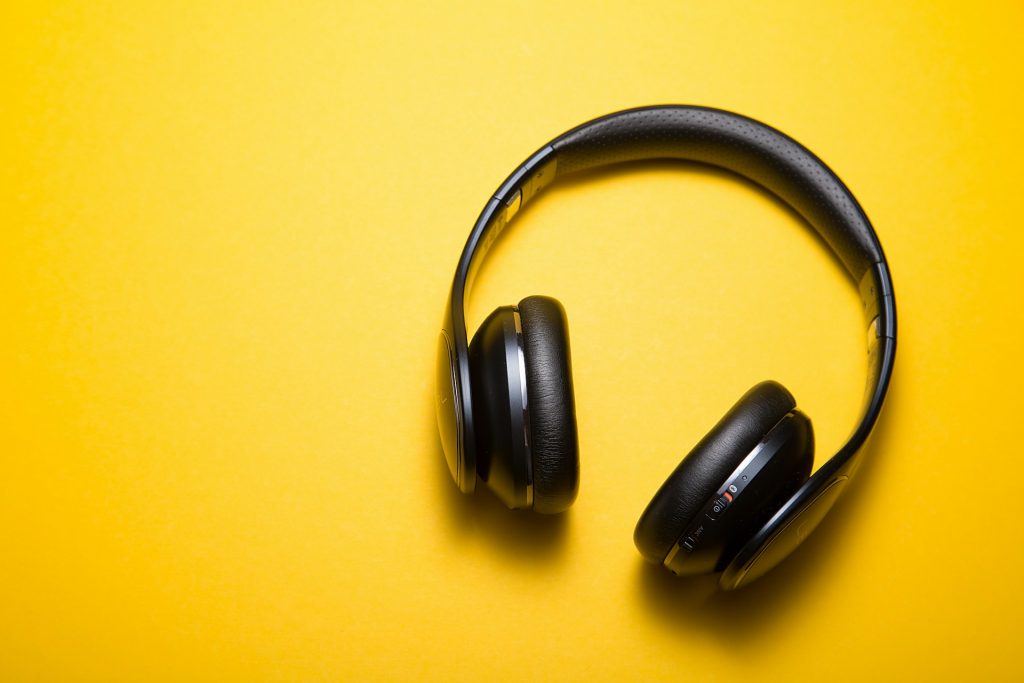
Earplugs for fans: foam vs. musician’s plugs
Foam earplugs
Disposable foam plugs are cheap, widely available and, when inserted properly, very effective. Many are rated with a Noise Reduction Rating (NRR) around 30 dB. To get that protection, roll the plug into a thin cylinder, pull the top of your ear up and back with the opposite hand, insert the plug and hold it in place while it expands. If half the plug is sticking out, you are getting much less protection than the package promises.
The downside is sound quality. Foam blocks high frequencies more than low ones, so music sounds muffled and boomy. Many people take them out after a song or two for that reason, which defeats the purpose.
High-fidelity or musician’s earplugs
These plugs use a filter designed to reduce volume more evenly across the frequency range. The result sounds like the same mix turned down, rather than the same mix through a wall. Off-the-shelf versions typically cut sound by something like 15 to 25 dB, and they are reusable. Prices vary, but they generally cost more than foam and far less than custom options.
Custom-molded plugs
An audiologist can take impressions of your ear canals and order custom plugs with interchangeable filters (common options are around 9, 15 or 25 dB of reduction). They are the most comfortable and consistent choice and a solid investment if you go to shows often. Expect a meaningfully higher price than off-the-shelf plugs, and check with a local audiologist for current costs.
The best earplug is the one you will actually keep in for the whole night. Comfort and sound quality are not luxuries; they are what make protection work.
Free habits that protect your ears
Earplugs do most of the heavy lifting, but small choices during the night add up.
- Do not stand in front of the speakers. Moving back from the PA stacks lowers your exposure significantly. The spot near the mixing desk often sounds best anyway, since that is where the engineer is listening.
- Take breaks. Step outside, go to the bar area, or visit the merch table between sets. Time in a quieter space gives your ears some recovery.
- Watch the cumulative total. A festival weekend, a loud bar and then headphones on the drive home all count toward the same budget.
- Do not crank headphones afterward. After a show, your perception of loudness is temporarily dulled, so you are likely to turn everything up.
- Keep alcohol in check. It makes loud sound feel less uncomfortable, which removes one of your natural warning signals.
If you are planning a full night out in Austin, our guide to planning the perfect night of live music covers earplugs alongside transport, food and timing.
Bringing kids to shows
Children’s ears are just as vulnerable to noise as adults’, and kids are less likely to tell you when something is too loud. For babies and young children, over-ear protective earmuffs sized for kids are the usual recommendation. They are easier to fit correctly than plugs, they stay on better, and small foam plugs can be a choking hazard for little ones. Older kids can use child-sized earplugs if they will tolerate them.
Daytime outdoor shows and family-friendly events tend to be easier on young ears than packed indoor clubs. Stay well back from the stage, plan regular quiet breaks, and leave early if your child seems upset or covers their ears. That is a clear signal.
For musicians: protecting your ears on stage and in rehearsal
Audience members might attend a loud show a few times a month. Working musicians can be around loud sound for hours, several days a week, between rehearsals, soundchecks, gigs and studio sessions. That makes hearing protection a career issue, not just a health one.
Rehearsal
Rehearsal rooms are often small and reflective, which can make them louder than the gig. Turning amps down, pointing them at the players rather than across the room, using rods or lighter sticks on drums for some practice sessions, and adding soft furnishings to tame reflections all help. Wearing musician’s earplugs during rehearsal is one of the most effective habits a band can build, and it gets easier with practice.
In-ear monitors
In-ear monitors can lower overall stage volume by replacing loud floor wedges, and good custom-fit models also block outside sound. The catch is that you can still damage your hearing with them if you push the mix too hot. Ask your engineer for a clean, balanced mix rather than “more me,” keep the level modest, and consider ambient mics in your mix so you do not feel cut off from the room. Never pull one ear out and leave the other blasting.
Drummers and the loudest seats
Drummers sit inches from cymbals, and hi-hats in particular can be brutal on the ear closest to them. Earplugs or isolating in-ears are close to essential behind a kit. On stage, a quieter overall backline lets the front-of-house engineer do more of the work and keeps everyone, players and audience alike, in a healthier range. If you are still building your rig, our article on drum machines vs. live drums looks at how hybrid setups can also change stage volume.
Recovery and warning signs
After a loud night, many people notice muffled hearing or ringing (tinnitus). This is often a temporary threshold shift, and it commonly fades within a day or two. Giving your ears quiet time afterward is sensible. But “temporary” does not mean “harmless.” Research suggests repeated exposures can cause lasting damage even when hearing seems to bounce back, and that damage builds over time.
Signs that it is time to see an audiologist or doctor:
- Ringing, buzzing or muffled hearing that lasts more than a day or two.
- Sudden hearing loss, particularly in one ear. This should be treated as urgent, because some treatments are time-sensitive.
- Ear pain, fullness, dizziness or discharge.
- Trouble following conversations in noisy places that seems to be getting worse.
- Sounds that suddenly feel painfully loud when they did not before.
A baseline hearing test is also a smart move for anyone who plays music regularly. It gives you something to compare against later.
Next steps
Buy a pair of musician’s earplugs, keep them on your keychain, and use them every time. If you are coming out to see us, check the shows page for dates and bring your plugs along. Before then, you can hear our songs at sensible volume on the music page, and if you have questions about a show, the FAQ and contact page are the best places to start.
Frequently asked questions
How loud are concerts?
It varies by genre, room and where you stand, but many club and arena shows run somewhere around 100 to 110 dBA, with louder peaks near the speakers. Under NIOSH guidance, the recommended exposure time at 100 dBA is about 15 minutes.
Are musician's earplugs better than foam earplugs?
Foam plugs can block a lot of sound when inserted correctly, but they muffle high frequencies. Musician's or high-fidelity earplugs reduce volume more evenly, so music sounds clearer, which makes people more likely to keep them in all night.
Is ringing in the ears after a concert normal?
It is common and often fades within a day or two, but it is a sign your ears were overexposed. Ringing or muffled hearing that lasts longer, or any sudden hearing loss, should be checked by an audiologist or doctor promptly. This is general information, not medical advice.
Written by Fort Never
Trip-hop, electronic dub and lo-fi folk from Austin, Texas. We write about sound, the Austin scene and the craft of independent music. About the band →